Planning a Master’s in Cybersecurity in Australia? Explore tuition fees, top universities, PR pathways, post-study work options and career prospects for Indian students.

A Master’s degree in Cybersecurity in Australia can be an excellent choice for students who desire to expand their expertise for a long-term career in a field in great demand in many areas, including technology, finance, government, healthcare, and more. Students rarely choose to study in Australia for only one reason; beyond the prestige of local institutions, other factors matter.
For Indian students, these include cost of living, opportunities, and the possibility of staying back after graduation. Since studying abroad is a huge investment, one should understand what qualification one will be getting at the end of the voyage. These courses are extremely expensive, and students should realistically evaluate the ROI.
What is the cost of a Master’s in Cybersecurity in Australia?
Tuition fees for a Master's in cybersecurity in Australia vary based on factors such as the institution, specialization, and the program’s duration. In general, a master’s degree in cybersecurity or related information technology courses costs between 20k- 50k AUD per annum, with higher fees at some universities.
Nevertheless, tuition fees represent only a part of the overall expenses – you will also need to cover the cost of accommodation, food, transport, health insurance, air tickets, and several other expenses. Moreover, visa applicants must demonstrate that they have enough money to pay for round-trip tickets, accommodation, tuition fees, and other expenses not mentioned above.
Thus, the amount of money you will need for the first year of your studies in Australia depends on the OSHC, bond, first-year rent in advance, flight tickets, and a local SIM card. Therefore, it is better to have more money than you think when preparing for studies in Australia – the expenses may accumulate faster than expected.
Which universities offer strong cybersecurity programs in Australia?
There is no particular best university for cybersecurity in Australia. It largely depends on what you are looking for. Factors may include academic reputation, cost, course focus, area of interest, program length, and career outcomes.
Some universities worth considering include:
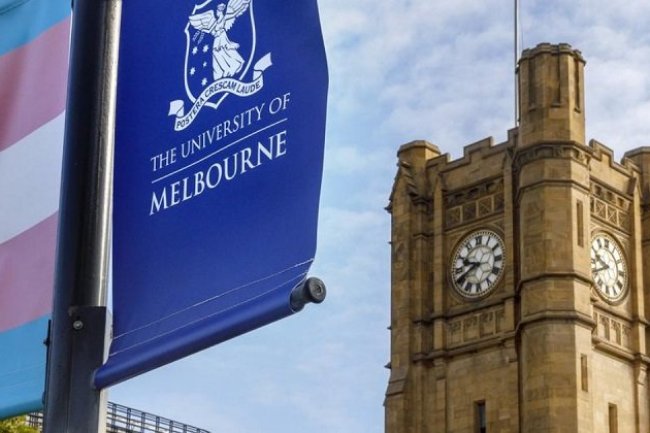
- University of Melbourne: Master of Information Technology: Offers IT specialization and cybersecurity, alongside artificial intelligence and distributed computing.
- RMIT University: Master of Cyber Security: Specialized in cybersecurity and computing. Estimated annual international tuition fee: A$38,400.
- UNSW Sydney: Master of Information Technology: This course offers IT with options in cybersecurity. First-year international tuition fee: A$63,000.
- Add University of Sydeney
- University of Queensland: Master of Cyber Security: This course takes 1.5 or 2 years to complete and includes an industry or research project. Annual international tuition fee: A$58,056 (2026).
- University of Sydney: Master of Cybersecurity — an 18-month, on-campus program with specialisations in Cloud Security, Cryptography and Blockchains, or Data and Information Security. Ranked 25th globally on the QS World University Rankings; check the official course page for current international fees.
- Monash University: Master of Cybersecurity: Offers expertise in the field of cybersecurity; accredited by ACS. International fees change annually; visit the official website for the most up-to-date information on expenses.
When comparing cybersecurity courses in Australia, consider factors that affect your learning experience. Besides value for money, look at the syllabus, hands-on training, accreditation, entry requirements, location, and career opportunities.
Can a Master’s in Cybersecurity in Australia lead to PR?
A degree obtained within the framework of the Master’s in Cybersecurity in Australia does not ensure residency. It depends on your occupation, skills assessment, English language proficiency, work experience, points, whether a state or territory nominates you, and whether you can receive an offer from an employer.
One of the options for eligible graduates to consider is the temporary graduate visa (subclass 485), which allows you to temporarily stay in Australia for work after completing your studies. Eligible Indian nationals who are covered by the Australia-India ECTA may be able to stay temporarily in Australia for up to three years if they are a master’s graduate in the relevant post-higher education work stream.
PR options after a Master’s in Cybersecurity in Australia
- Subclass 189: the skilled independent visa is assigned based on the person's occupation, skills assessment, score, and experience.
- Subclass 190: skilled nominated visa needs an additional step of the state or territory nomination to be eligible.
- MATES is a temporary pathway for eligible Indian graduates and professionals in Australia, mainly in ICT and AI, with 3,000 places available annually through a ballot.
- Therefore, when considering migrating to Australia to study for a Master’s degree in Cybersecurity, it is essential to choose the right course to meet your career objectives and study plans. Remember, obtaining PR is not guaranteed.
Is a Master’s in Cybersecurity in Australia worth it?
Australia is a great choice for students who wish to pursue higher education in cybersecurity, be immersed in an English-speaking environment, and gain work experience after graduation.
The worth of a master’s degree in Cybersecurity in Australia depends on the student’s personal goals. Therefore, it is important to evaluate the most relevant factors, such as curriculum, specializations, expenses, environment, and job prospects, and disregard the irrelevant ones.
For example, for instance, Praval Pratik Nanda, an ACHIVIA student, graduated from the University of Sydney with a BSc in Advanced Computing. He attributes his success to the mentoring and documentation at ACHIVIA that got him into the university.
Ultimately, the key question isn't "Which university is the best?" but "Which course best matches my goals?"
Planning to study cybersecurity in Australia in 2027?
If you are considering a master’s degree in cybersecurity in Australia in 2027, the first thing to do is compile a list of desired options. In this case, you should examine the criteria – academic performance, budget, specialization, and location and consider university-specific factors, including application deadlines and English language proficiency, scholarships, and visa conditions.
Once you have narrowed your options, make sure your statement of purpose clearly shows you are a good fit for the program by articulating your background, professional aims, and reasons for applying. For assistance, ACHIVIA’s statement of purpose guide 2026 is a fantastic resource.
ACHIVIA can also support you with Study Abroad Counseling, College Choice, SOP / Essay Editing, and Resume Review.
What's Your Reaction?